What God Says About Marriage: A Biblical Guide for Christian Couples
Marriage is under pressure. That is not a new observation, but it is an honest one. Divorce rates remain high even among churchgoers, and many couples who do stay together are not particularly happy about it. Books, podcasts, and counselors offer all kinds of advice, but the most important voice on marriage is still the one most people skip: the Bible.
This is not a theoretical topic for God. He designed marriage, witnessed the first one, and has a great deal to say about how it should work. If you are in a Christian marriage, or heading toward one, this is worth slowing down for.
Marriage Was God’s Idea
Genesis 2:24 is the foundational verse: “Therefore a man shall leave his father and his mother and hold fast to his wife, and they shall become one flesh.” Jesus quoted this verse directly in Matthew 19 when he was asked about divorce. He went straight to the beginning because the beginning is where the design is.
God did not create marriage as a social contract or a legal arrangement. He created it as a covenant, a binding commitment between one man and one woman that reflects something true about his character. In Ephesians 5:32, Paul calls this covenant a “profound mystery” that points to the relationship between Christ and his church. That is a remarkably high view of marriage. It means your relationship is carrying more weight than you may realize.
What Ephesians 5 Actually Says
Ephesians 5 is probably the most quoted and most misread passage on Christian marriage. People tend to zoom in on verse 22 (“wives, submit to your husbands”) and miss the verse that comes right before it: “submit to one another out of reverence for Christ” (verse 21). That is the foundation. Mutual submission. Both partners yielding to each other in love.
The instruction for husbands is actually the harder one. “Husbands, love your wives, as Christ loved the church and gave himself up for her” (verse 25). Christ gave himself up. That is sacrificial love, not domineering love. A husband who reads Ephesians 5 as permission to boss his wife around has missed the point entirely. The model he is given is a man who laid down his life.
Love Is a Decision
One of the most practical truths about biblical marriage is that love, in the New Testament, is mostly a verb. It is something you do, not just something you feel. First Corinthians 13 does not say “love is a warm feeling.” It says love is patient, kind, not easily angered, keeps no record of wrongs. These are all actions.
Feelings in a marriage will fluctuate. That is normal and human. There will be seasons where you genuinely enjoy your spouse’s company and seasons where you have to decide to be kind even when it is difficult. The couples who build strong marriages are not the ones who never stop feeling romantic. They are the ones who choose each other on the ordinary days, the tired days, and the frustrating days.
This does not mean stuffing your emotions or pretending everything is fine when it is not. It means your commitment to love is not dependent on how you feel this morning.
Forgiveness Is Not Optional
Colossians 3:13 says to forgive as the Lord has forgiven you. That is a high standard, and it applies directly to marriage. In a long-term relationship, you will be hurt. You will also hurt. There is no way around this. Two imperfect people living together closely will wound each other, sometimes unintentionally and sometimes not.
Couples who do not build a culture of genuine forgiveness tend to build a culture of score-keeping instead. Old arguments get dragged into new ones. Every grievance stays on the table. This is exhausting, and it slowly destroys the trust a marriage needs to survive.
Forgiving your spouse does not mean pretending the offense did not happen or that it did not matter. It means releasing the debt. Choosing not to hold it over them. This is not easy. But it is what God asks, and it is what healthy marriages practice.
Communication Rooted in Truth and Kindness
Proverbs 15:1 says “a soft answer turns away wrath, but a harsh word stirs up anger.” That single verse could transform how many Christian couples argue. How you say something matters as much as what you say.
The Bible consistently connects truth with love. Ephesians 4:15 talks about speaking truth in love. In a marriage, that means being honest with your spouse about your needs, your struggles, and your concerns, but doing it in a way that serves them rather than wounds them. Brutal honesty without love is just brutality.
If you are struggling to communicate in your marriage, that is worth addressing directly, whether through intentional conversations, a trusted pastor, or a Christian counselor. Asking for help is not a sign of weakness. It is a sign that you take your marriage seriously.
Praying Together Is Simpler Than You Think
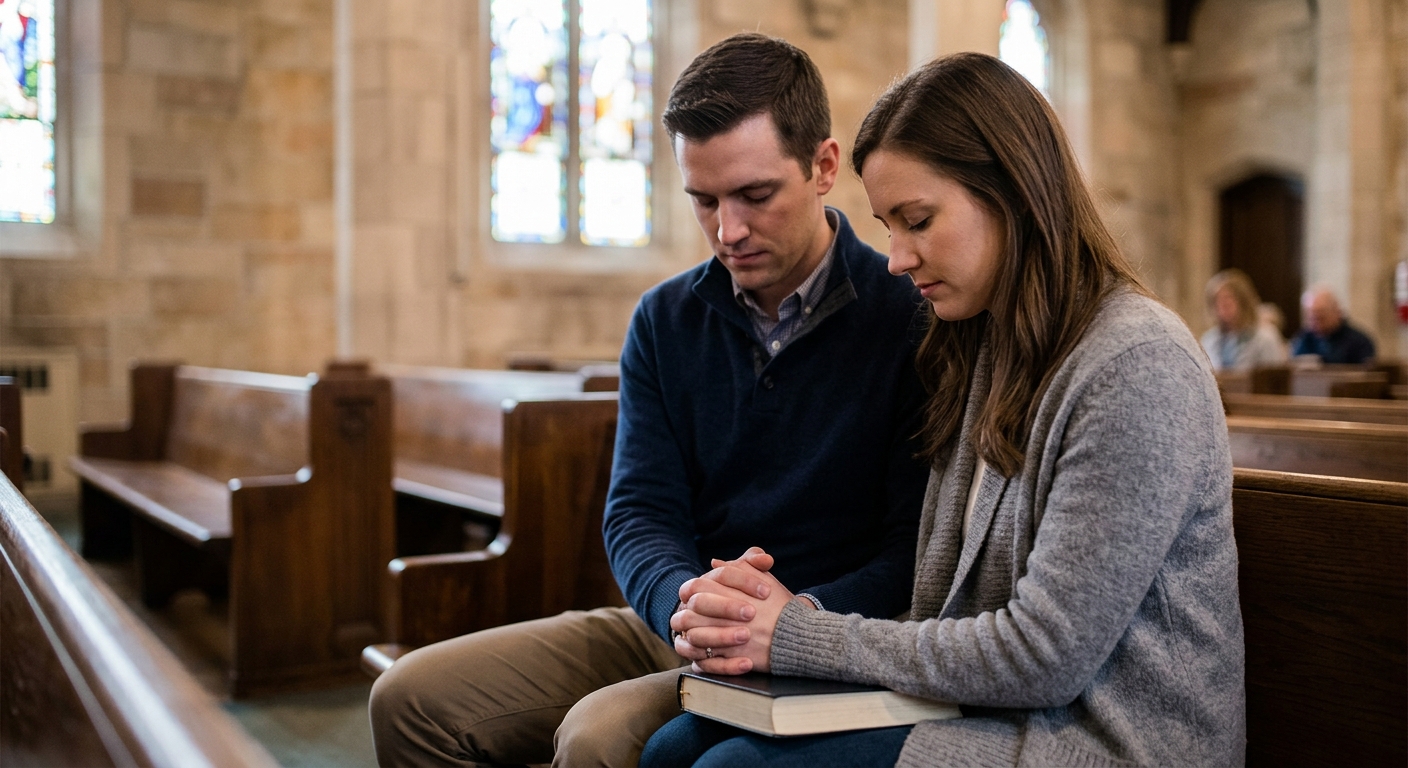
Many couples say they want to pray together but somehow never do. The barrier is usually awkwardness, not theology. If you have never prayed together as a couple, you do not need a script. Start small. One sentence before bed. Thanking God for something specific. Asking for something you both need.
Couples who pray together regularly are not just checking off a religious box. They are reminding themselves and each other that their marriage exists in the presence of God. That is a significant thing to remember on a difficult day.
A Marriage Worth Fighting For
The Bible does not promise that Christian marriage will be easy. It promises something better: that God is present in your covenant, that his grace is available for the hardest seasons, and that love, as he defines it, is strong enough to hold a marriage together when feelings alone are not enough.
If your marriage is in a good place right now, invest in it. Do not coast. If it is struggling, do not wait for things to improve on their own. The same God who designed marriage is the one who offers the strength to sustain it.